Case study
One source in. A month of publishable content out.
A content engine that turns one source document into platform-native posts, where every line passes a codified voice audit before it ships.
Built in Python on Claude agents. I can walk your team through it on a call. By Amber Lan, AI marketing engineer. Last updated 20 August 2026.
Explore all selected work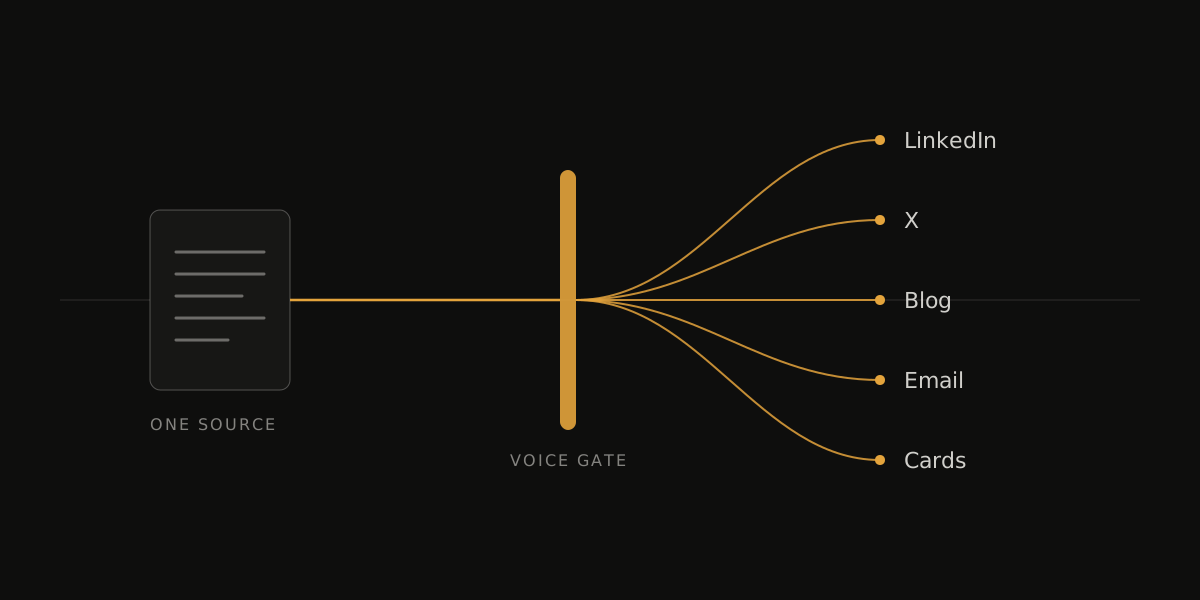
The brief.
One person needed platform-native content at volume that still reads human.
Quality control at scale
Volume should build trust. Left unchecked, recognisable tells and a drifting voice erode it, so the real work is quality control.
Voice as checkable law
Rules a machine can check, written down. Zero tolerance for recognisable AI patterns. Each platform gets a post in its own native shape. The pipeline runs solo inside a bigger operating week.
The build.
Source document in, a packet of platform-shaped posts out, ready for a human yes or no.
Plan
The engine plans a skeleton per artefact and generates platform-native drafts.
Audit
Every line runs through a voice gate: banned words and patterns, sentence rhythm, claim discipline, and the brand's specific rules.
Rewrite
The engine rewrites any failing artefact against its specific violations.
Key decisions.
Four calls that moved the engineering to where it matters.
The audit is the product
Generation is cheap. The gate makes the output shippable, so most of the engineering lives there.
Codified rules over prompts
Style guidance in a prompt decays. Codified rules, checked line by line, hold the standard.
Human approves, machine produces
The operator's job collapsed from writing to judging, the only part that needed a human.
Coordinated packets
One source becomes a coordinated set across platforms, so the calendar fills in one pass.
The result.
In production, one source document reliably becomes a month of on-brand, platform-native content.
In production
The operator's time now goes to judgement. Packaged as a reusable skill, the pipeline carries over to a new brand once its voice rules are codified.
Evidence
The engine runs on a company's own brand files, so its code stays private, and I can walk your team through it on a call. The distribution half is public: Social Media OS.
What I learned
Generated content wins or loses at the last metre, in the lines a reader would flag as machine-made. Fixing those at the gate, line by line, turns a content faucet into a content engine.
Let's point a system like this at your business.
Building this inside a team, or hiring for it? Tell me what you are working on.